

You know the moment. You peel off your beanie, catch your reflection in the elevator mirror, and your hair looks like it just met a Van de Graaff generator. Welcome to static winter hair, the seasonal plot twist nobody puts on a holiday card.
Most advice blames dry air and stops there. That’s only half the story. The other half is hanging by your front door: your scarf, your hat, your coat lining. Your cold-weather wardrobe is a friction machine pointed at your head.
Good news: you can fix it without breaking up with your favorite cashmere.
Why Your Winter Scarf Zaps Your Hair (It’s Physics, Not Personality)
Static is just electrons changing addresses. When two materials rub together, one donates electrons and the other grabs them. Scientists rank materials on this tendency in something called the triboelectric series.
Human hair sits near the “donor” end. Wool is a close neighbor. Polyester, acrylic, and nylon sit near the “grabber” end.
Here’s the twist: your 100% wool scarf isn’t always the main villain. The bigger offenders are often what’s touching it:
- Polyester coat linings
- Acrylic-blend beanies
- Fleece hoods
- Wool-acrylic “wool” scarves that are mostly acrylic
Dry air then locks in the charge. Moisture lets electricity drain away harmlessly. Winter heating can drop indoor humidity below 30%, so the charge has nowhere to go.
Rough, lifted cuticles make it worse. If your strands are already fried, they hold charge like a grudge. Our guide to repairing damaged hair is the long-term fix.
The 60-Second Winter Wardrobe Audit

Before you buy a single product, check your closet. Grab your three most-worn winter pieces and flip the tags.
- Hat: Acrylic or polyester? That’s your prime suspect.
- Scarf: Anything blended with acrylic will spark more than pure wool.
- Coat collar and hood: Smooth nylon linings scrape your hair every time you turn your head.
- Hair contact zones: Note which piece touches your hair most. Start fixing that one first.
You don’t have to replace everything. Natural fibers tend to behave better, so when something wears out, upgrade to wool, cotton, or silk. A well-made scarf is one of those investment pieces that pays you back every single winter.
Barrier Dressing: The Fix For Static Winter Hair
You can’t always change the fabric. But you can put something between it and your hair.
Try a silk or satin layer. Wear a thin silk scarf or bandana under your wool one. It gives the wool something slippery to rub against instead of your neck and hair.
Line your hat. Satin-lined beanies exist, and a DIY satin lining is a 15-minute sewing job. If you don’t sew, a silk scrunchie-style headband under the hat works in a pinch.
Fix how you undress. Most static happens on removal, not wear. Lift hats straight up and away. Unwind scarves downward, away from your face. Dragging fabric across your head is the spark.
Layering is also a style move, not just a survival one. Our winter fashion bucket list has outfit ideas that make a silk-under-wool combo look intentional.
How to Fix Static Winter Hair on the Go
Keep a tiny rescue kit in your bag. It takes up less room than a lip balm.
- Hand cream. Rub a pea-sized amount between your palms until it nearly disappears. Then glide your hands over the top layer of your hair. It adds just enough moisture to calm flyaways, with no greasy finish.
- Wooden comb. Plastic combs generate static. Wood and boar-bristle brushes don’t.
- Ground yourself first. Touch a metal doorknob or your keys before you touch your hair. It discharges the buildup you’re carrying.
- Spritz the brush, not your head. Mist a flexible-hold hairspray or anti-static spray on the bristles, then sweep through. You get control without a crunchy helmet.
Having a messy day anyway? Tucking everything into a messy bun keeps strands out of the friction zone altogether.
Your Indoor Air Needs a Plan, Too
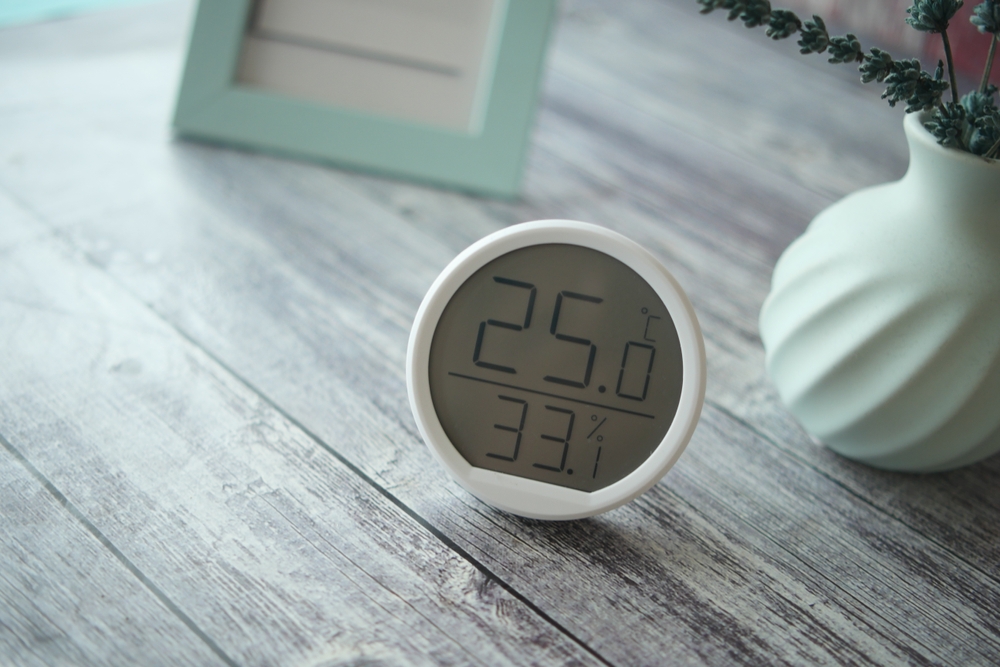
If you’re fighting static winter hair every single morning, look at your home’s air before you blame your shampoo.
A hygrometer costs about $10 to $15 and tells you your indoor humidity at a glance. Aim for roughly 40% to 50%. Below that, everything crackles: hair, sweaters, your sofa cushions, your patience.
Cheap ways to raise it:
- Run a small humidifier in your bedroom overnight
- Leave the bathroom door open after showering
- Air-dry a load of laundry on a rack indoors
Bonus: your skin will thank you, too. Dry hair and dry skin often show up as a package deal.
The Shower and Styling Fixes That Actually Stick
What you do at home sets up the whole day. A few small changes make a big difference.
Go lukewarm. Hot water strips moisture. Finish with a quick cool rinse to help smooth the cuticle.
Leave a little moisture in. Apply a leave-in conditioner or a hair serum for dry hair to damp hair, concentrating on the mid-lengths and ends.
Mask weekly. A good hair mask works best when you follow the dos and don’ts. Skip the roots and give the ends extra time.
Stop blow-drying early. Bone-dry hair holds more charge. Stop when hair is about 90% dry, then finish with your dryer’s cool shot. An ionic dryer helps, too.
Swap your towel. Rough terry cloth ruffles the cuticle. Use a microfiber towel or an old cotton T-shirt and blot instead of rubbing.
You don’t need a 12-step ritual. Fold these tweaks into the haircare routine you already have, and swap rather than add.
Don’t Forget the Scarf Itself
Your scarf may be generating its own drama. Here’s how to calm it down:
- Wash with wool wash. Regular detergent can leave fibers rough and charged.
- Add a splash of white vinegar to the final rinse. It softens fibers and helps reduce static. The smell vanishes as it dries.
- Skip dryer sheets on wool. They can leave residue. Air-dry flat, or use wool dryer balls if you tumble dry.
- Store it clean. Dust and lint attract and hold charge.
The Static Hair Quick-Fix Cheat Sheet
Short on time? Run this checklist before you walk out the door:
- Is the hat or hood synthetic? Add a silk layer.
- Hair dry or fluffy? Hand cream, palm-glide.
- Brush plastic? Swap it for wood.
- Indoor air feeling like the Sahara? Check the hygrometer.
The Bottom Line on Static Winter Hair
Static winter hair isn’t a personal failing. It’s friction, dry air, and a few sneaky synthetic fabrics working as a team.
Audit what touches your hair, add a silky barrier, fix your indoor air, and keep a few emergency tricks in your bag. You’ll stay warm, stylish, and spark-free all season.
Want more cold-weather rescues? Browse our hair archive and steal whatever works for you.






Leave A Comment