

If you’ve ever stood in the makeup aisle staring at 47 different foundations while a stranger silently judges your highlighter, this post is for you. Makeup for beginners doesn’t have to feel like a chemistry exam with glitter. The truth is, a solid routine is less about buying everything and more about doing a handful of things in the right order — with the right products for your skin.
No gatekeeping. No ten-step complexity. Just a real, working routine that’ll have you looking put-together without requiring a film crew and a professional artist on standby.
Before You Touch a Single Product: Prep is Everything
Here’s the thing nobody tells beginners: your face is the canvas. If it’s not ready, no amount of product is going to save you. Great makeup starts with good skincare — always.
Wash your face with a gentle cleanser, apply a lightweight moisturizer, and let it sink in for five minutes before you start. Hydrated skin holds makeup better, wears more comfortably, and just looks… nicer. If you want to go the extra mile, our post on 10 Makeup Hacks for Dewy, Glowing Skin covers exactly how to build the kind of base that makes your whole routine easier.
Quick note on SPF: If your moisturizer doesn’t have sun protection built in, add a dedicated SPF before anything else. Just let it dry completely first — rushing this step is a recipe for pilling.
Step 1: Primer — The Secret Most Beginners Skip
Primer is the unsexy middle child of makeup, and it gets wildly underestimated. It smooths fine texture, extends how long your makeup stays on, and prevents that dreaded sliding-off-your-face situation by noon.
For makeup for beginners, a simple hydrating or pore-blurring primer works for most skin types. Apply a pea-sized amount after your SPF, concentrating on areas where your makeup tends to fade (usually the nose and center of the face). Wait 60 seconds for it to set before moving on.
One thing to watch: silicone-based primers and water-based foundations are not friends. If your primer feels silky and slippery, pair it with a silicone-based foundation. Like with like — this is chemistry, not a preference.
Step 2: Foundation — Find Your Match, Then Use Less Than You Think
Choosing foundation is where beginners often go wrong — and it’s usually not the product, it’s the amount. Most people use twice as much foundation as they need.
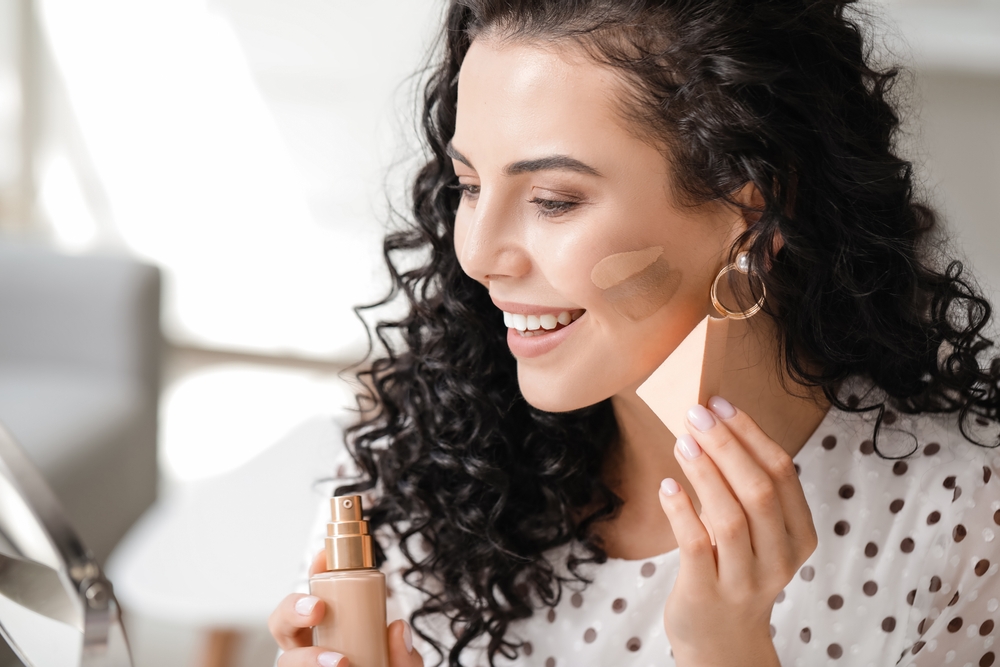
Start with a shade that matches your neck (not your hand, not your wrist — your neck). Apply it with a damp beauty sponge or a foundation brush, blending outward from the center of your face. Build coverage slowly; you can always add more, but you can’t subtract.
If your foundation keeps looking patchy, flaky, or weirdly textured, that’s usually a skin prep issue.
Coverage note: Beginners don’t need full coverage. A light-to-medium coverage formula is more forgiving to apply and more natural-looking while you’re learning technique.
Step 3: Concealer — Targeted, Not Plastered
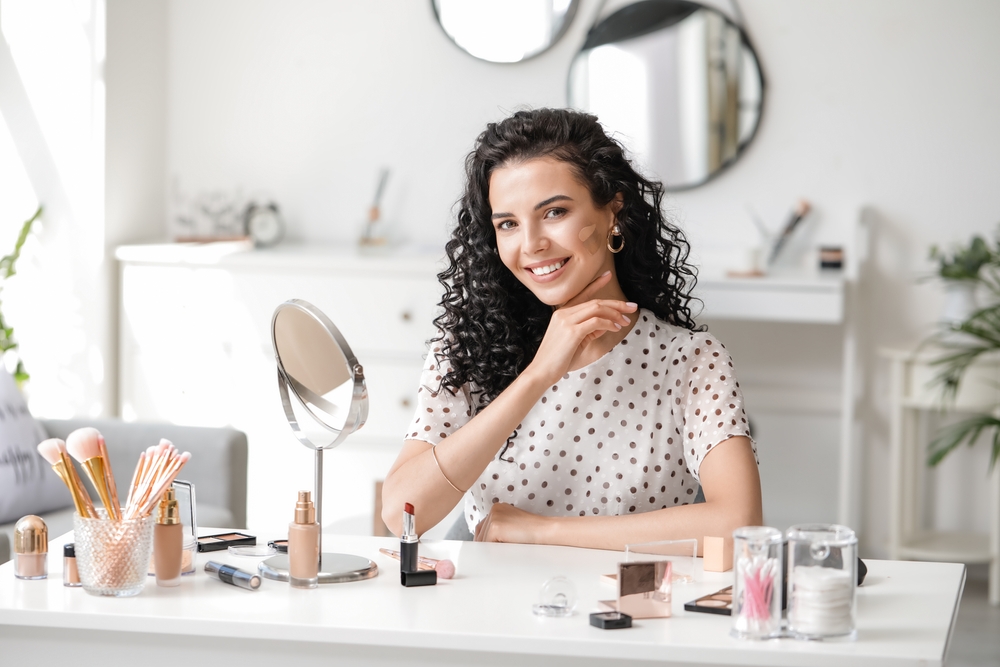
Concealer goes on after foundation, not before. Yes, really. Foundation does the heavy lifting; concealer swoops in as the precision tool for under-eye circles, blemishes, and any spots the foundation didn’t quite cover.
For under eyes, apply in a triangle shape (pointing down toward your cheek) and blend gently with your fingertip or sponge. The warmth of your finger helps it melt in beautifully. For blemishes, dab — don’t rub.
Go one shade lighter for under eyes, match your skin tone for everything else.
Step 4: Setting Powder — Optional, But Worth It
If you have oily skin or you’re going to be out all day, a light dusting of translucent setting powder will prevent your hard work from melting. Apply it in the T-zone (forehead, nose, chin) with a fluffy brush, and leave the rest of your face alone.
If you have dry skin, skip the powder entirely. It’ll just emphasize any dry patches and make you look older than you are. Dry skin people: a setting spray is your best friend.
Step 5: Brows — More Important Than You Realize
Nothing frames the face quite like a defined brow. You don’t need to be precise; you just need to exist in the vicinity of your natural brow shape and fill in any sparse areas.
For makeup for beginners, a brow pencil with a fine tip is the most forgiving tool. Use light, hair-like strokes rather than drawing a solid line. Brush upward with a spoolie when you’re done to blend everything and make it look natural.
The goal is “you, but slightly more awake” — not “drawn on with a Sharpie.”
Step 6: A Simple Eye Look — Because Less Is More
You don’t need a 12-pan eyeshadow palette to start. Pick three shades: a matte light shade, a medium shade, and a darker shade. Apply light all over the lid, medium in the crease, dark at the outer corner — blend well with a fluffy brush. That’s literally all it is.
If eyeshadow feels like too much, a single coat of mascara (curl first!) is enough to make your eyes pop. Wiggle the wand at the base of your lashes and pull upward. Two coats max before it starts to clump.
For those who want to explore more, our guide on How to Create a No-Makeup Look with High-End Products is a great rabbit hole — it shows how a subtle eye technique can make the whole face look effortlessly polished.
Step 7: Blush and Bronzer — The Dimension Duo
This is the step that separates “I’m wearing makeup” from “wow, you look great” — and it’s the step most beginners either skip or overdo.
Blush: Smile and apply to the apples of your cheeks, blending upward toward your temples. Start light — you can build up.
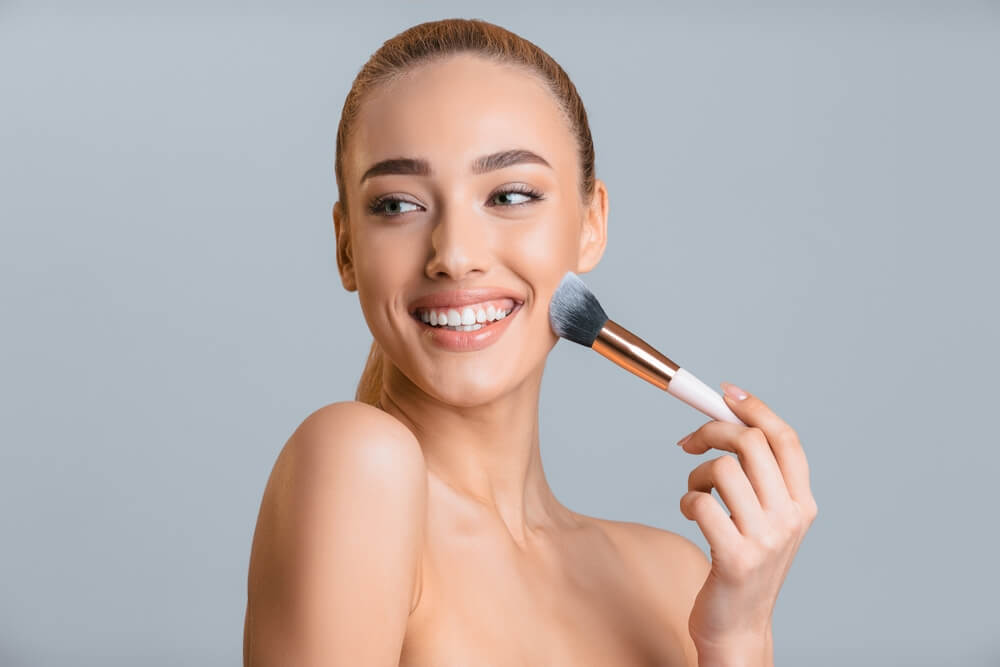
Bronzer: Apply where the sun would naturally hit: forehead, temples, bridge of nose, and jaw. Use a large, fluffy brush and blend until there’s no visible line.
Step 8: Lips — The Finishing Touch
This one’s easy: pick a color you love and put it on. Liner first, if you want definition, then lipstick or gloss on top.
If you’re nervous about color, a nude lip close to your natural shade is universally flattering and genuinely foolproof. Glossy lips are also having a serious moment right now, and they require approximately zero skill.
The Golden Rules for Makeup for Beginners
Before you go: a few things worth burning into your memory.
- Blend everything. There is no such thing as too much blending.
- Less product, more layers. Build up slowly.
- Match your tools to your products. Brushes for powder, sponges for liquid.
- Skincare makes everything easier. Always.
- Practice is the only real hack. You will not be perfect on day one, and that’s fine.
Makeup for beginners is really just about learning the order of operations and respecting the canvas underneath. Once you’ve got the basics in your muscle memory, you can experiment with trends, bold colors, and editorial looks — but only after the fundamentals feel second nature.
And if you’re hungry for even more technique, our Ultimate Guide to Flawless Makeup has everything from formula-picking to long-wear application. Consider it the advanced course to this beginner’s orientation.
Start simple, stay consistent, and trust the process. Your future self — the one confidently applying concealer in under 30 seconds — will thank you.

Leave A Comment